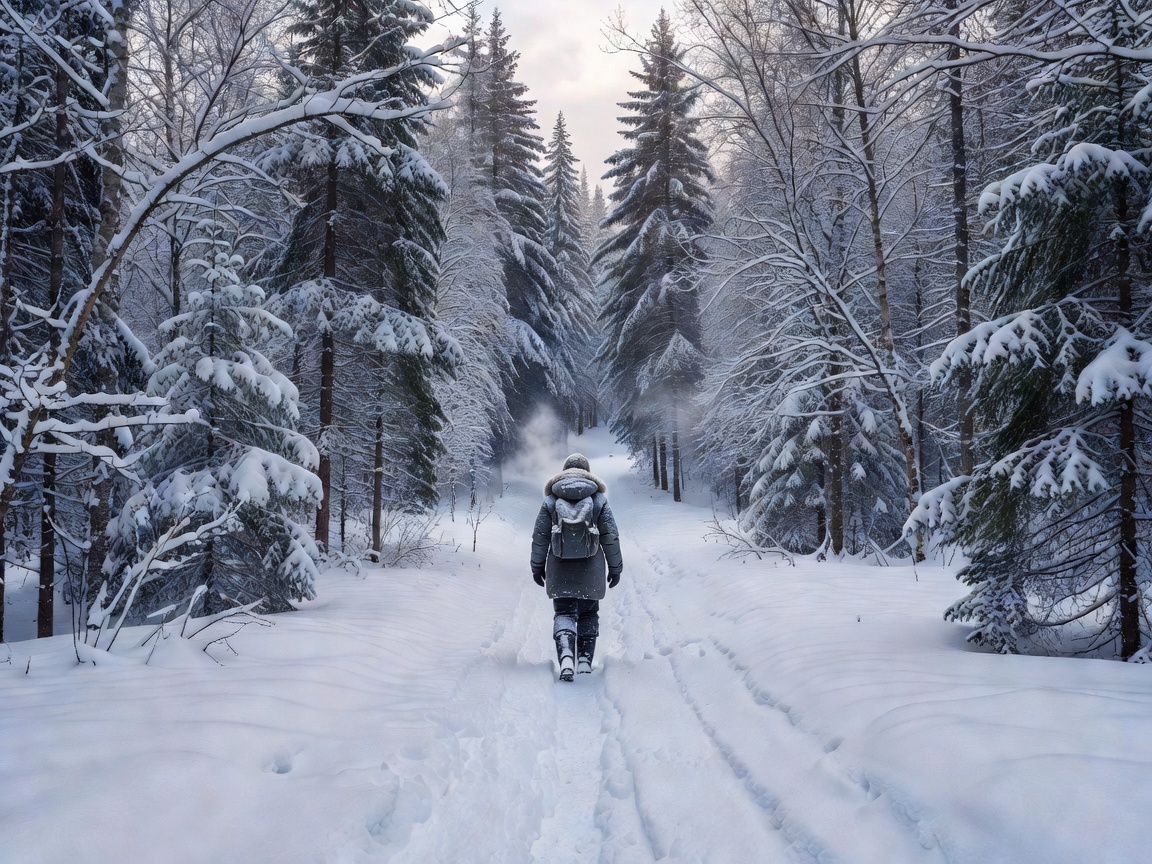
Winter activities are condition-dependent. Snow cover, daylight, ice, wind and local maintenance can change plans. Treat published route information as a starting point. Check current notices before leaving and choose a lower-risk alternative when conditions are uncertain.
Cross-country skiing
Cross-country skiing can suit forest parks and open winter landscapes when snow and grooming conditions allow. Confirm that a route is currently suitable, whether equipment rental is available, and whether access arrangements have changed. Do not assume a summer walking trail is prepared for skiing. Beginners should choose a route and setting that match their ability, and ask a qualified local provider for advice.
Carry a charged phone, suitable layers, water and a route plan. Tell someone where you expect to be. Short daylight makes start and return timing important. Avoid extending a route simply because the first section feels manageable.
Walking and snowshoeing
Winter walking can work on maintained paths, town routes and marked nature trails. Surface conditions may include snow, slush, ice or exposed ground. Use footwear with appropriate traction. Snowshoes can help in deeper snow but do not remove the need for navigation, fitness and local condition checks. Ask whether a route is open and suitable for winter use.
Keep the route modest when daylight or weather is uncertain. Turn back if visibility drops, footing worsens or the return becomes unclear. Stay on permitted paths and respect closures. In rural areas, do not assume there will be lighting, staffed facilities or mobile coverage.
Skating and sledding
Skating depends on managed facilities or ice specifically designated as safe. Never infer ice safety from appearance, temperature or other people being present. Do not skate on natural water unless the responsible local authority has clearly assessed and opened it for that use. Follow posted restrictions. Ask about current operation directly with the facility.
Sledding is best treated as a site-specific activity. Check the slope, access, supervision rules and equipment guidance before use. Avoid roads, tree lines and unmarked slopes. Children need close adult supervision. Conditions can change quickly, so stop when visibility or surface control becomes poor.
Sauna and cold-weather routines
Sauna traditions are part of winter life across the region. Experiences vary by setting, provider and local custom. Ask about access, etiquette, health considerations and what is included. If a sauna experience involves a cold plunge or outdoor exposure, follow provider instructions and make a conservative decision based on your own health. There is no need to treat extreme cold exposure as a required part of a winter trip.
Photography and nature observation
Winter light can support landscape, street and wildlife photography. Plan for short daylight and protect batteries from cold. Use paths and viewing areas that remain open. Keep distance from wildlife and avoid disturbing nesting or resting areas. Do not enter fragile shoreline or wetland areas without clear permission and safe access.
Regional differences
Urban areas tend to offer more managed indoor options and easier access to equipment or services. Forest and countryside areas may provide more quiet and space, but require greater self-sufficiency. Coastal settings bring exposure to wind and changing surface conditions. In Estonia, Latvia and Lithuania, conditions vary by location and date; a general regional description cannot replace local guidance.
Good for
Walking suits travellers who want a flexible pace and can adapt routes. Skiing and snowshoeing suit visitors with suitable skills, equipment and verified conditions. Managed skating and sledding areas can work for activity-focused visits when currently operating. Sauna suits travellers seeking a cultural or restorative experience, subject to personal health and provider guidance.
What to know
- Check current operating status and route conditions with the responsible provider.
- Carry suitable clothing, water, a charged phone and a simple return plan.
- Do not use unassessed natural ice or closed routes.
- Set a turnaround point before starting.
- Keep a non-outdoor alternative for changes in weather or daylight.
Activity availability, access and local rules can change. Verify the latest information before travel. For clothing, transport and contingency planning, use the planning guide.
NEXT FILE
Make the route workable.
Prepare for daylight, transport and changing winter conditions.
Open winter planning